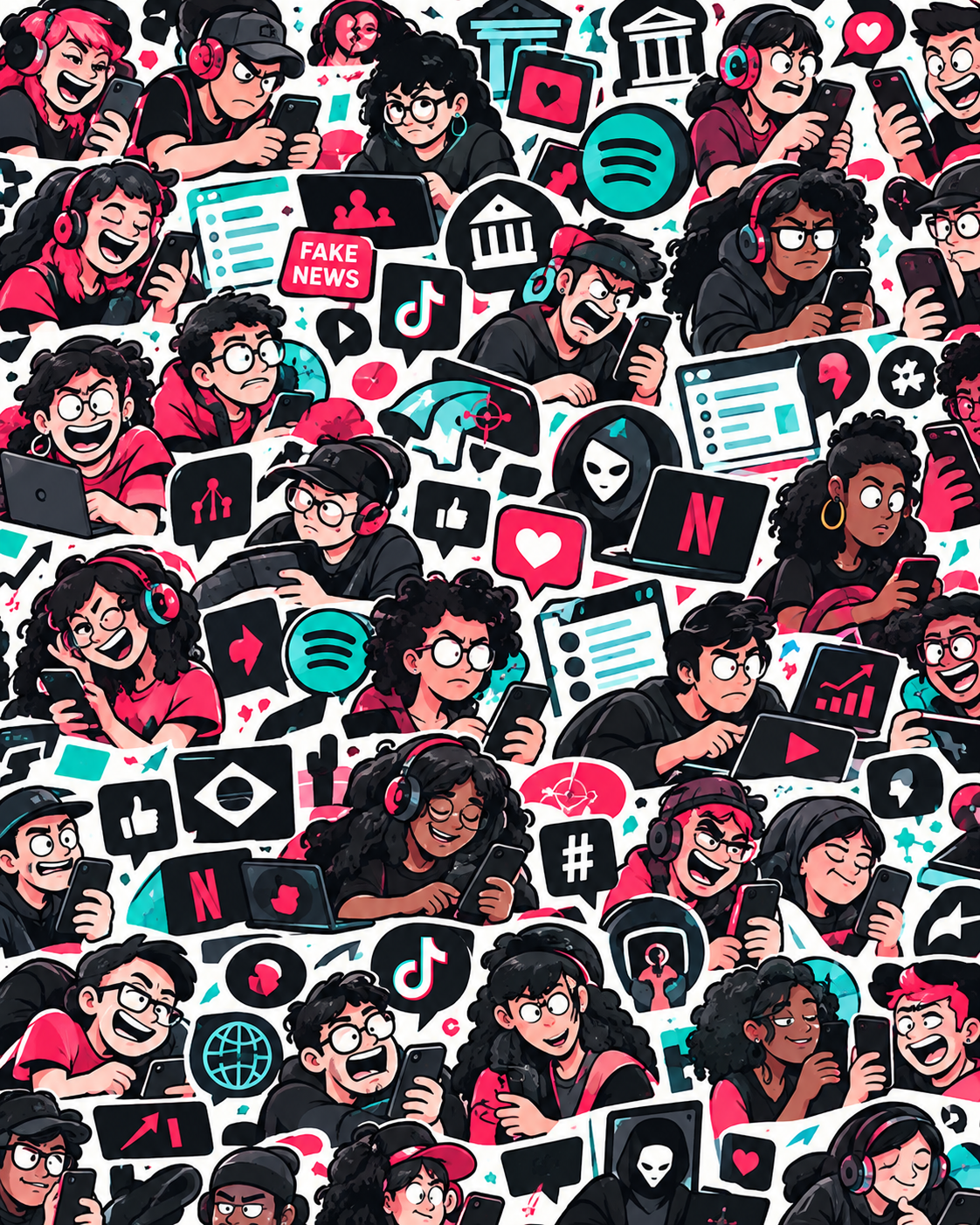
The experiences of cultural consumption and production have been strongly crossed by political dynamics, whether in terms of affiliation to identities, such as gender or race, or regarding belief regimes and performances of taste. Although relatively neglected, the relationship between politics and cultural production can help explain many of the contemporary nuances. Digital platforms, however, add a complex component to this binomial. While they allow the prospective mapping of tastes and preferences among users more easily and in a volume of data never imagined, their insertion in this chain should not be seen as neutral. The project intends to develop a set of investigations aimed at understanding different aspects of platformization and datafication that involve cultural production and politics. Specifically, it intends to (1) comparatively study how taste exerts its effects on individuals’ political preferences and vice versa; (2) discuss how the recommendation systems of digital platforms, considering not only social media but also streaming services such as Spotify and Netflix, can guide the formation of homophilous audiences and, at the same time, how these subjects learn, negotiate or resist the agencies of these systems; and (3) analyze imagistic and discursive representations that articulate subjectivities to political and cultural identities. The project proposes to implement a data analysis laboratory and a research network specialized in qualitative and quantitative approaches, with an emphasis on digital methods, social network analysis, content analysis, and online ethnography. The results from these investigations are expected to provide knowledge about how political groups have extensively benefited from taste and, conversely, how entertainment and popular culture can operate as elements of (de)politicization.