coLAB Publications
Reports, articles and other available publications
A selection of the publications, articles and reports produced by the laboratory over the past years.
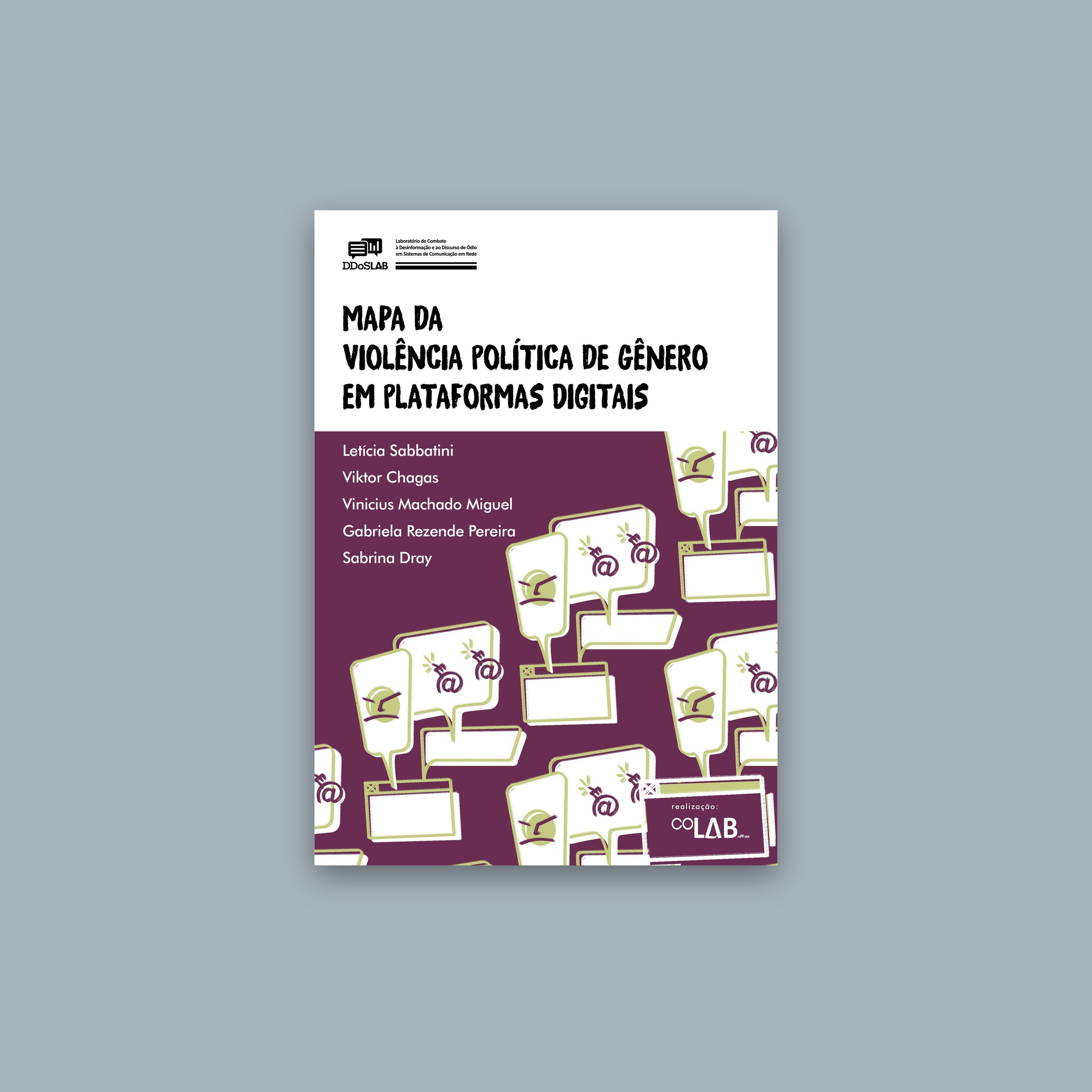
A selection of the publications, articles and reports produced by the laboratory over the past years.
An interpretive analysis of memes about the Sílvio Almeida case, investigating the relationship between humor, racism and misogyny in the Brazilian digital memesphere.
A comparative case study that combines an approach from digital methods with interpretive analysis in order to reflect on the strategic uses of meme humor in public communication.
An analysis of the extent to which civic bots constitute an activist communication repertoire on Twitter, based on Brazilian initiatives.
How private communication networks, especially WhatsApp, have been used to spread attacks against the media and journalists.
An analysis of the circulation of and engagement with content featuring anti-democratic discourse on TikTok.
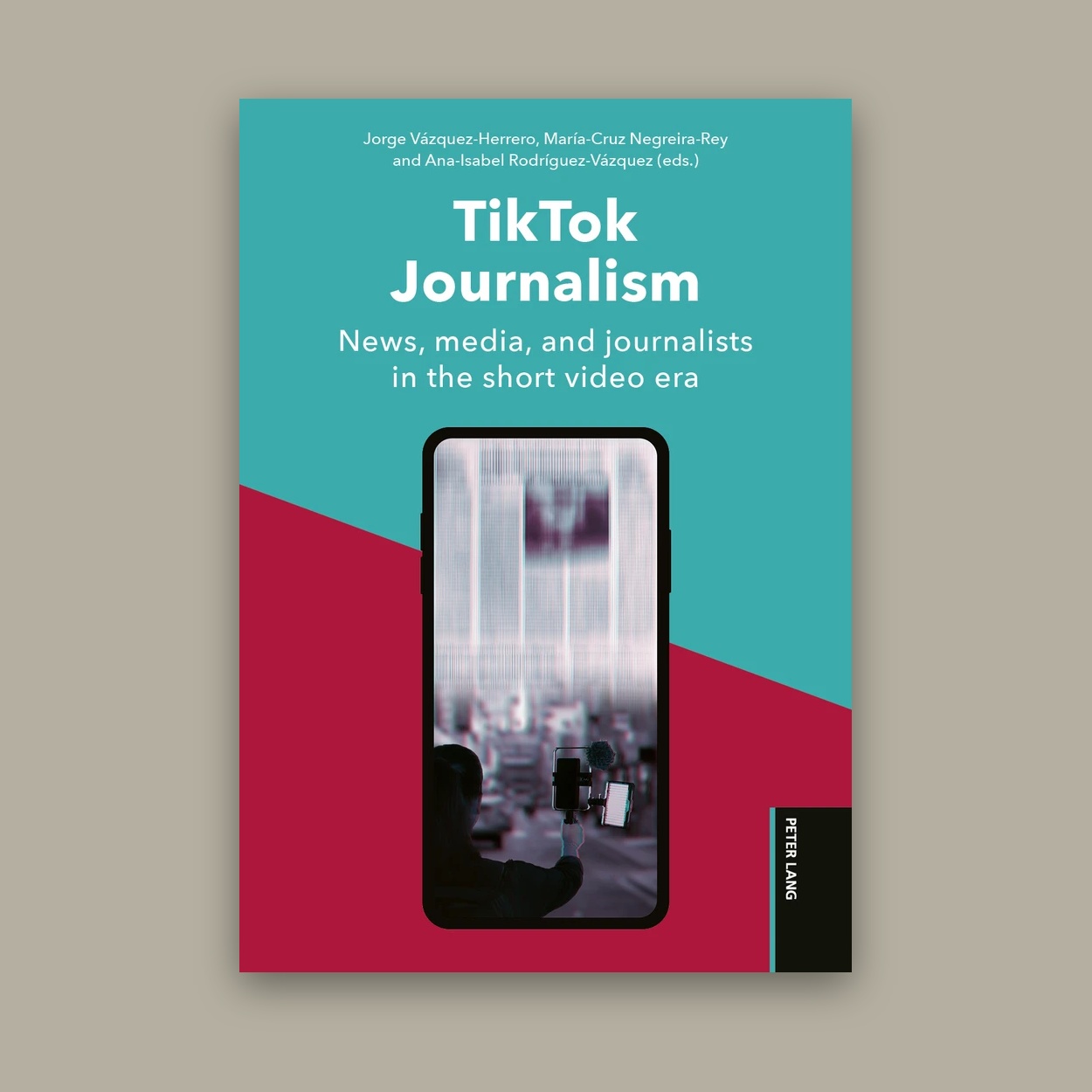
Chapter in a collection edited by Jorge Vázquez-Herrero, María-Cruz Negreira-Rey and Ana-Isabel Rodríguez-Vázquez on journalism on TikTok, with the participation of coLAB researchers.
An overview of the characteristics and transformations of Brazilian Communication and Politics research since 1989, a foundational landmark of the field.
An interpretative analysis of digital memes on private messaging networks and their relationship with resentment in far-right communication.
How memes about the war in Ukraine were mobilized in pro-Bolsonaro WhatsApp groups to reframe Brazilian national politics.
How Bolsonarist networks appropriate transnational humor memes, adapting them to local realities or preserving their universal character.
A scoping review of 31 articles on emerging uses of artificial intelligence in qualitative research and their ethical considerations.
An analysis of the manifestations of gender-based political violence on digital platforms, based on a database of more than 4 million mentions of women parliamentarians.
A typology of the discursive action of harmful political content in public WhatsApp and Facebook groups of the radical right in Brazil.
The article seeks to establish a theoretical framework that understands internet memes as a language, identifying eight factors common to these digital contents.
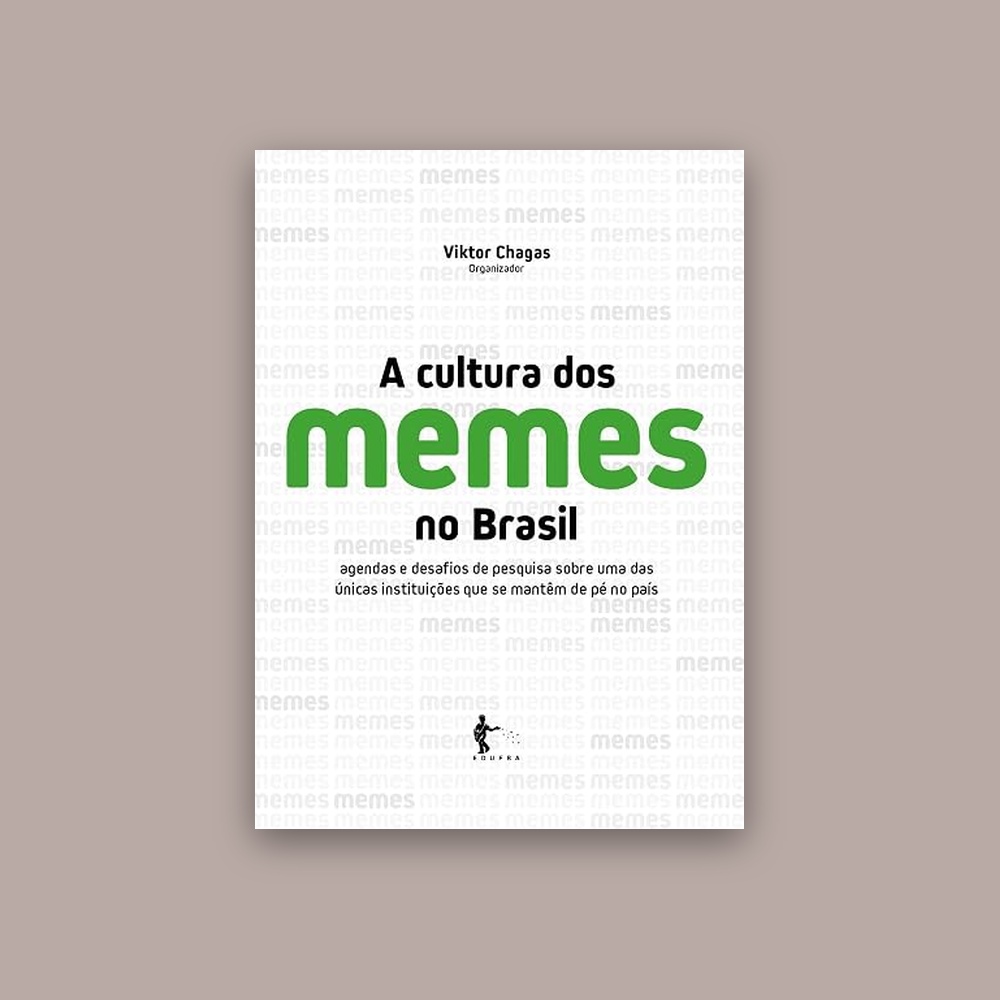
A collection edited by Viktor Chagas on research agendas and challenges surrounding memes in Brazil.
How the environmental opacity of platforms affects the spread of extremist memes on Twitter and WhatsApp.
Whether tracking Twitter trending topics can help identify moments of acute political tension in Brazil.
How Brazilian politicians make use of TikTok's affordances, based on an analysis of about 23,000 videos published by 265 profiles.
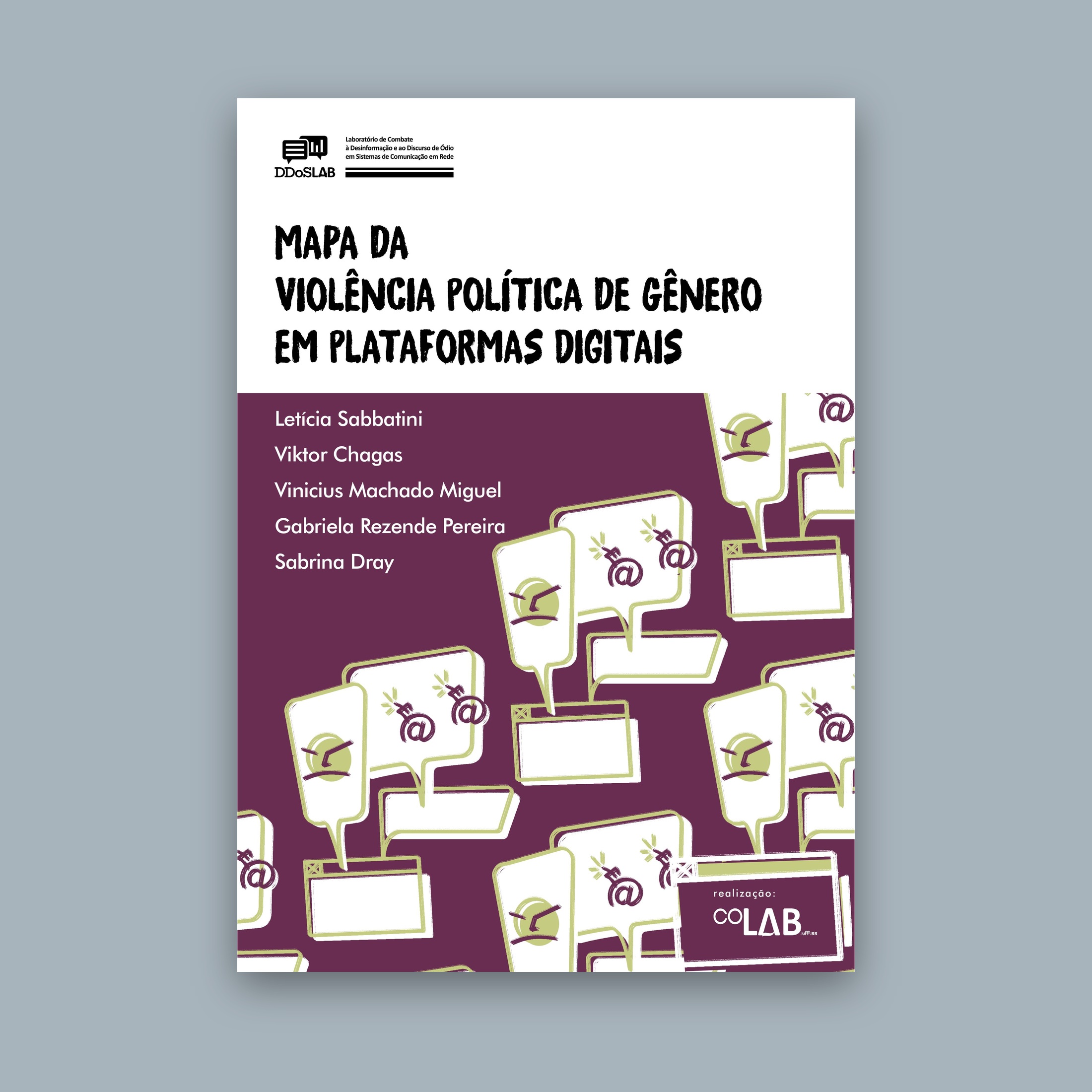
DDoSLab report on gender-based political violence on digital platforms.
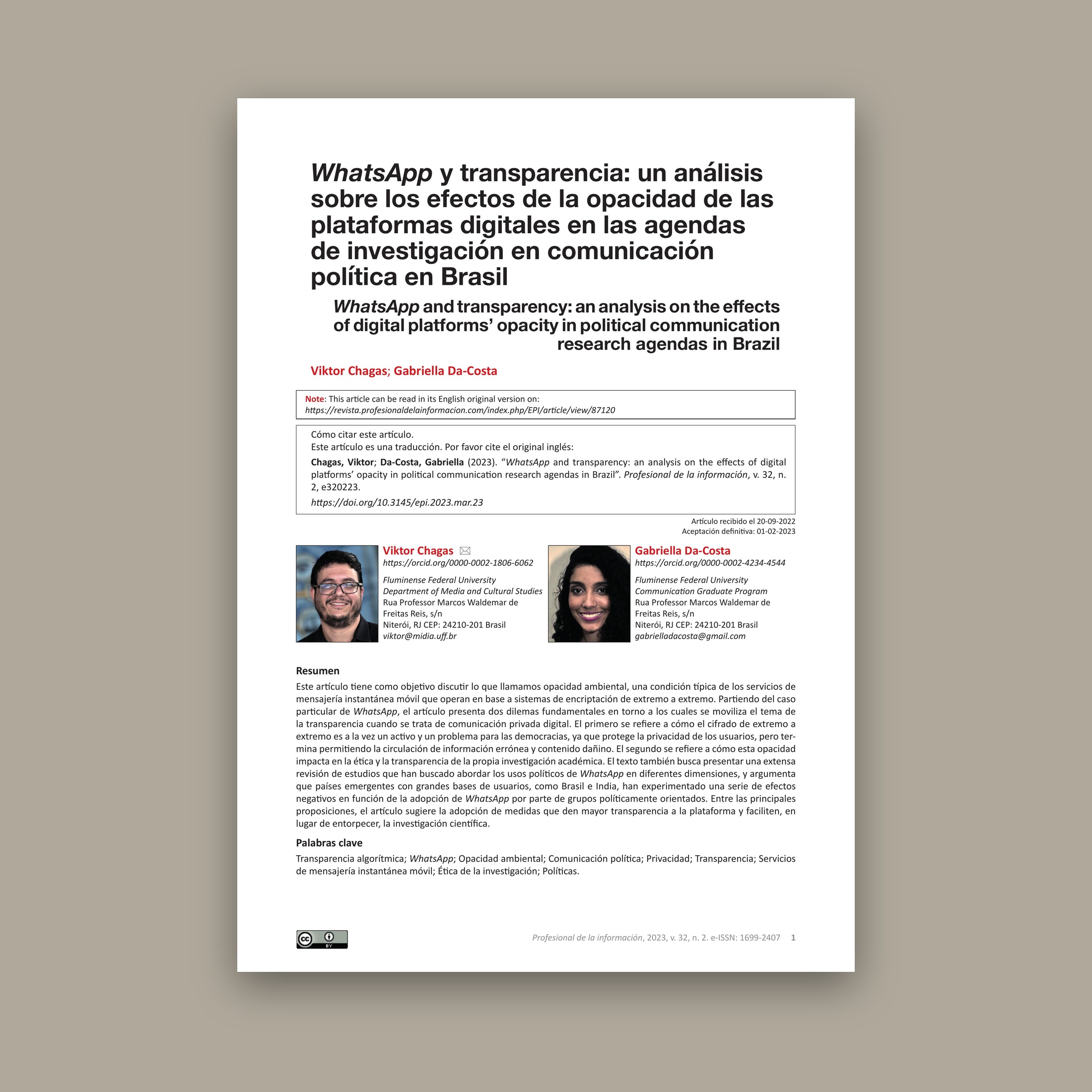
On WhatsApp's environmental opacity and its effects on the ethics and transparency of academic research itself in political communication in Brazil.
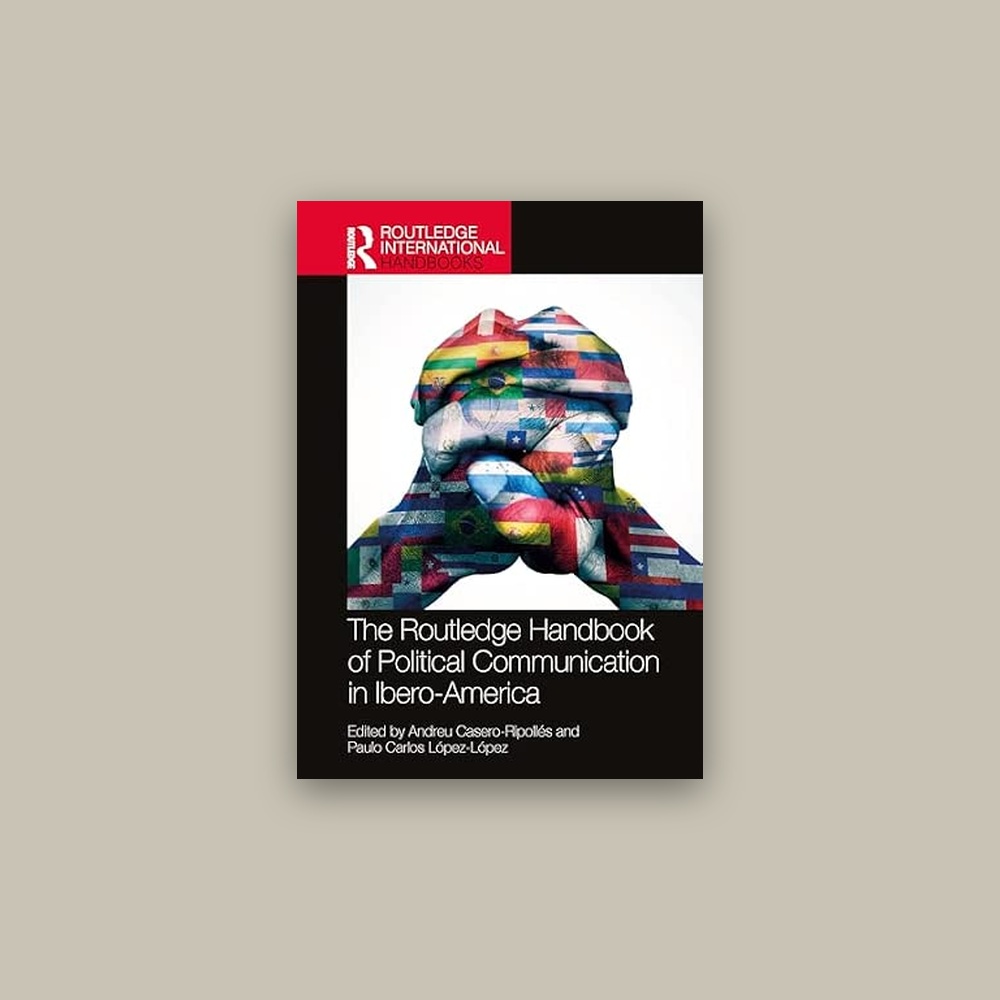
Chapter in a handbook edited by Andreu Casero-Ripollés and Paulo Carlos López-López on political communication in Ibero-America, with the participation of coLAB researchers.
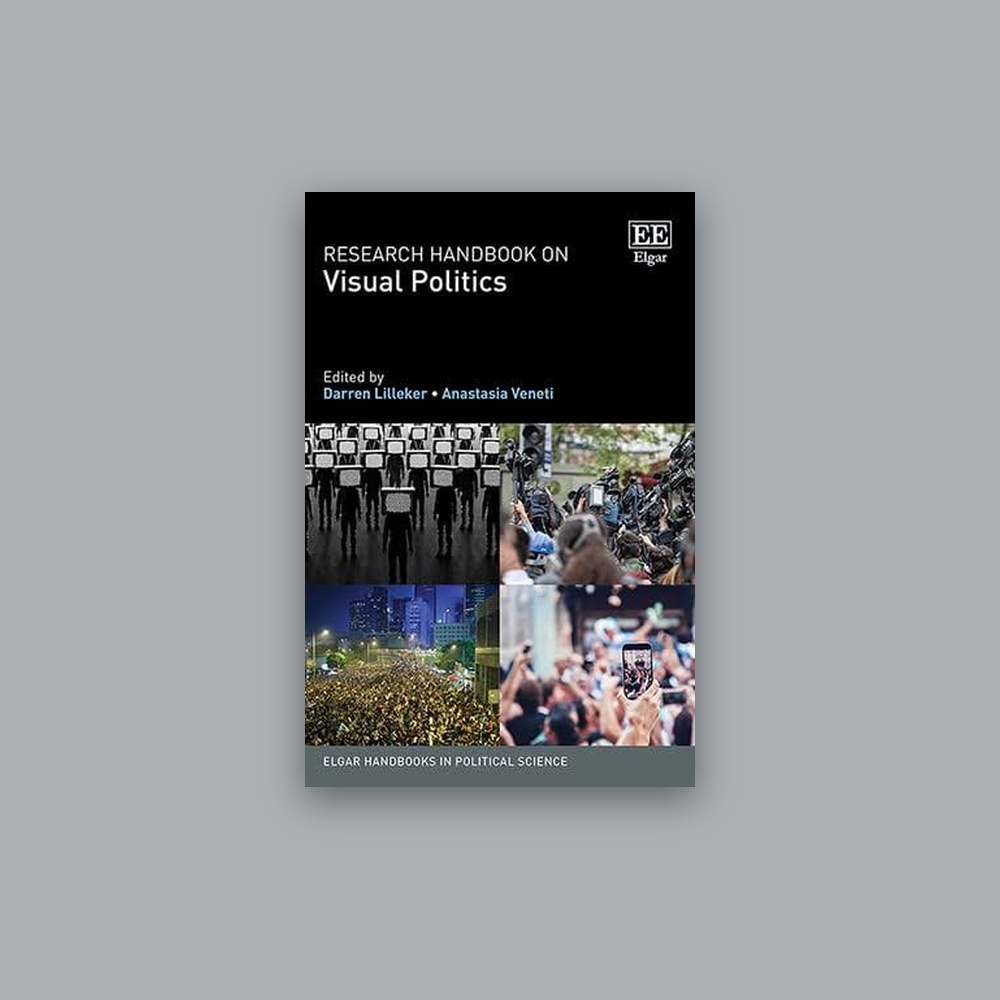
Chapter in a handbook edited by Darren Lilleker and Anastasia Veneti on visual politics, with the participation of coLAB researchers.
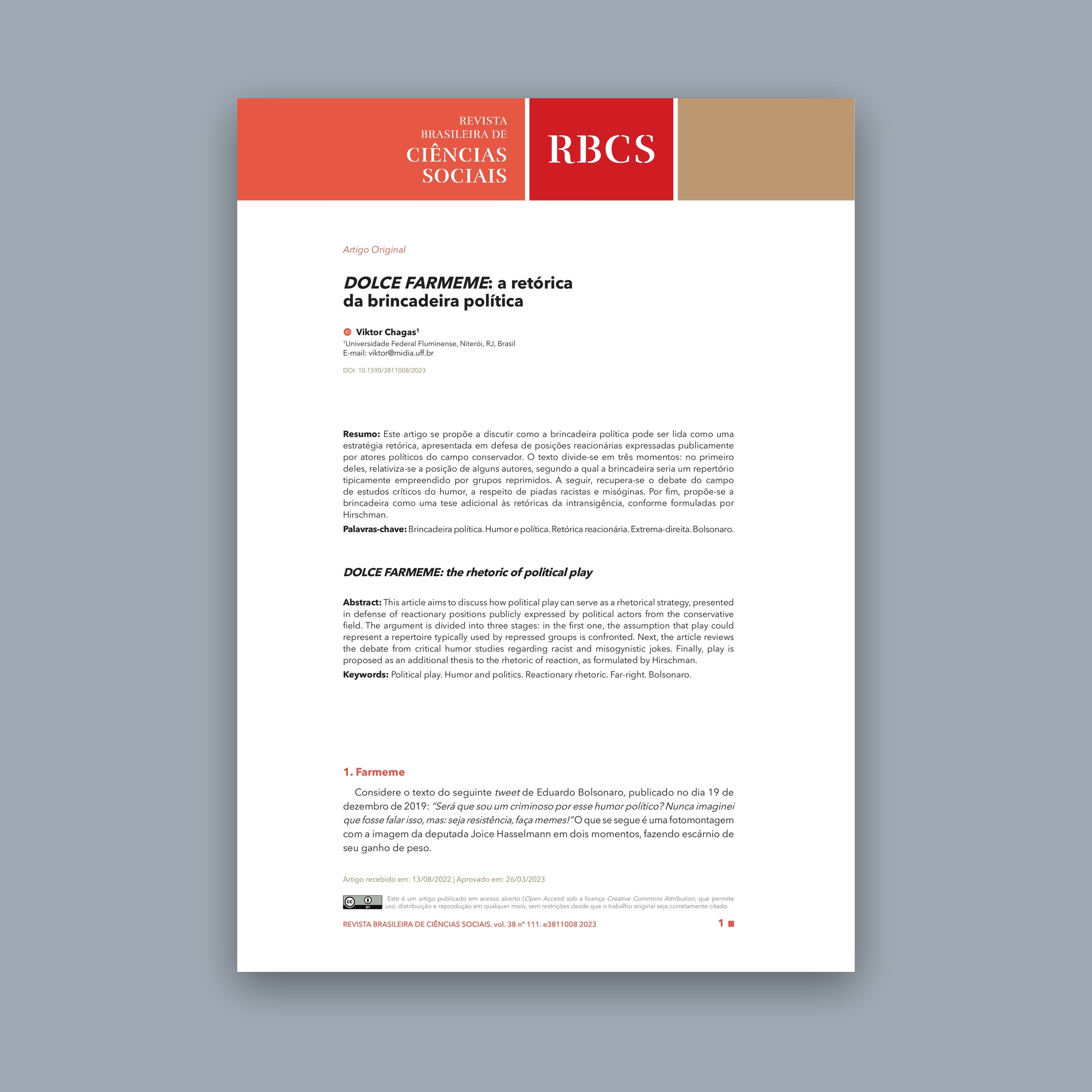
How political play can be read as a rhetorical strategy in defense of reactionary positions of the conservative camp.
A collection co-edited by María Jesús Fernández Torres and Laura Teruel Rodríguez on disinformation and political communication in Ibero-America, with the participation of coLAB researchers.
Book chapter discussing the deontology of humor and the relationship between humor and democracy.
A comparison of coordinated behavior patterns in hashtags created by supporters and opponents of the Bolsonaro government on Twitter.
Executive report of the Amazonômetro Project on the circulation of Amazon-related content in WhatsApp groups.
An investigation of digital astroturfing in political discussion groups of Bolsonaro supporters on WhatsApp, based on social network analysis.
DDoSLab report on the use of TikTok and its relationship with political polarization in Brazil.
Report on political digital influencers in Brazil, including the results of Phases I, II and III of the research.
On the informational paths triggered in Bolsonarist WhatsApp groups and the central role of influencers as an information source.
An analysis of the use of WhatsApp as a mobilization tool for the Brazilian Senate's public consultations on the e-Cidadania portal.
An analysis of Bolsonarist WhatsApp memes and their relationship with political events in Brazil.
Chapter in a collection on the memory of the Olympics in Brazil, edited by Lia Calabre, Eula Dantas Taveira Cabral, Maurício Siqueira and Vivian Fonseca.
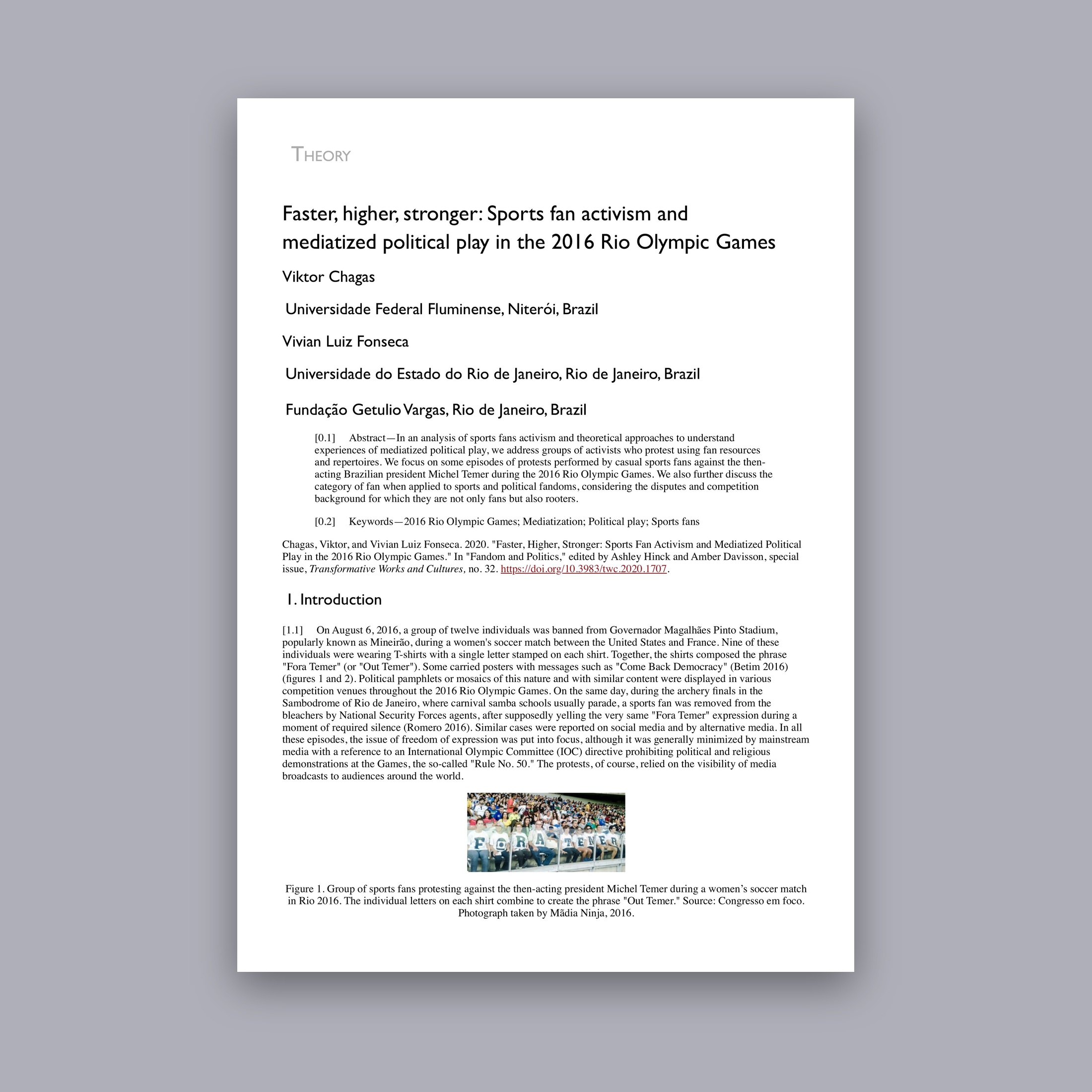
An analysis of sports fan activism and experiences of mediatized political play against then-acting president Michel Temer during the Rio 2016 Olympic Games.
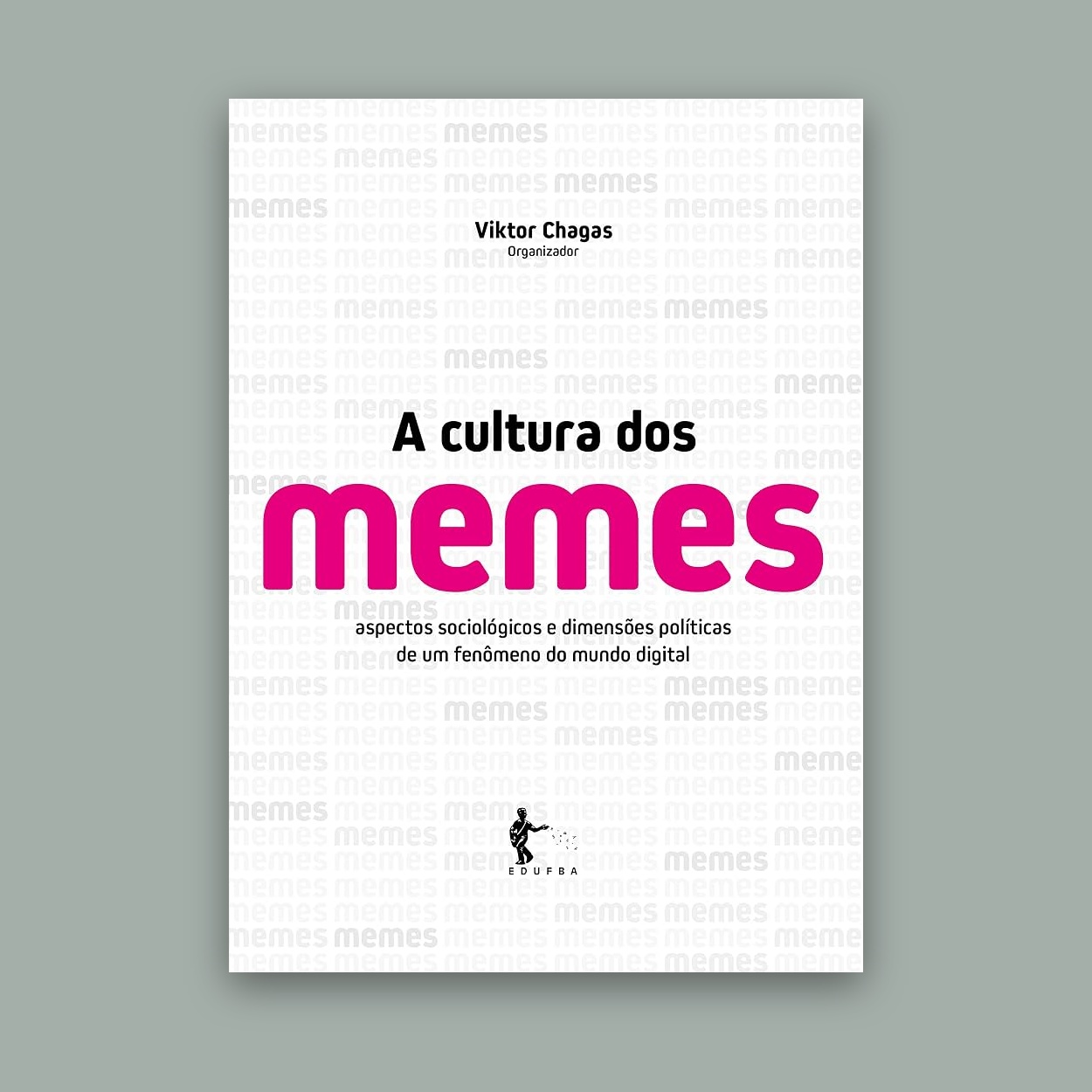
A collection edited by Viktor Chagas on the sociological aspects and political dimensions of internet memes.