Research
Humor and Hate: Memes as a Threat to Digital Democracy
Investigation into the relationships between the humor of digital memes and online extremism.
Investigation into the relationships between the humor of digital memes and online extremism.
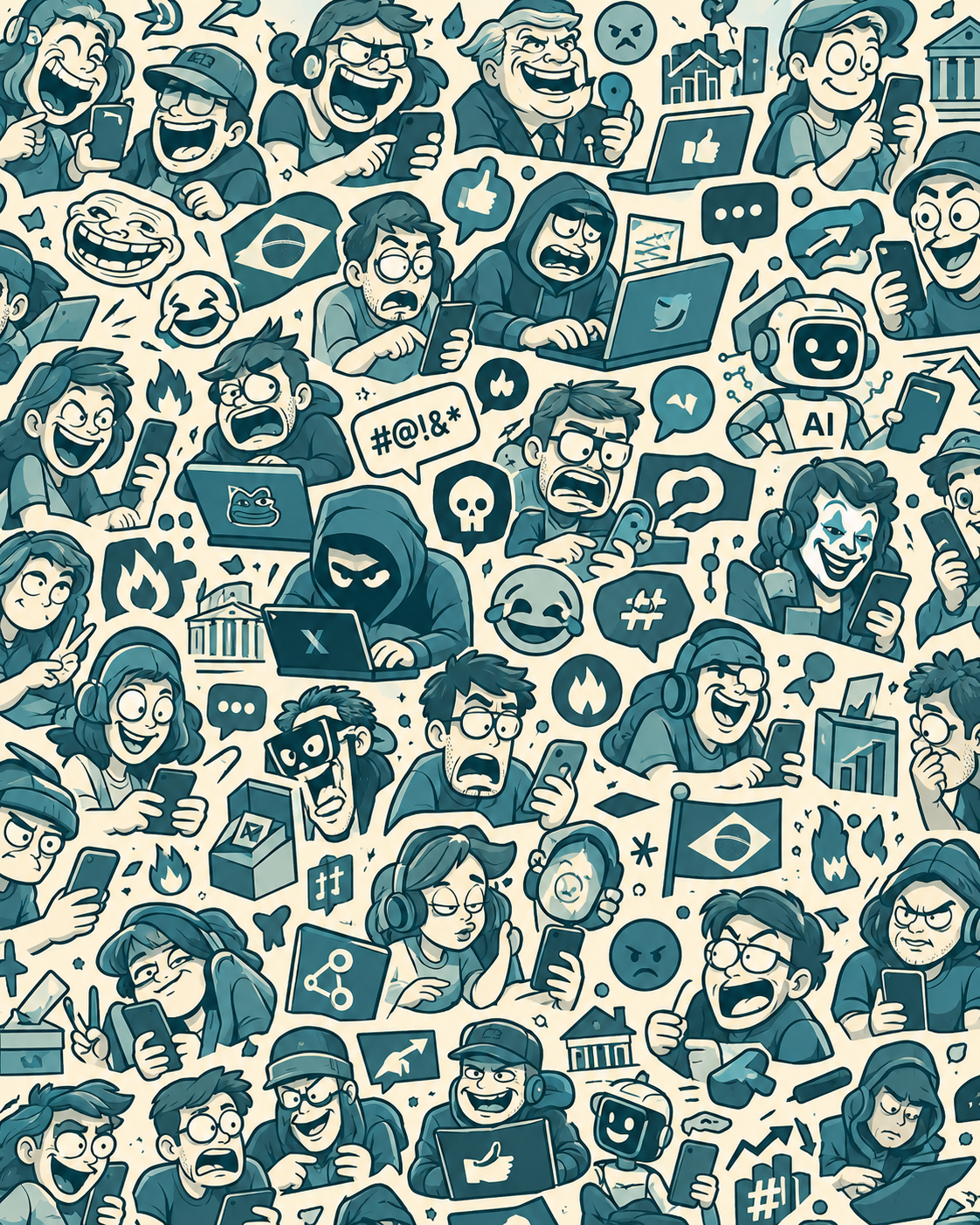
SUMMARY This project aims to understand whether and in what ways humor is capable of interfering in the democratic environment, and how the digital has fostered the fallacious understanding that humor is a mild and harmless repertoire, without major consequences. Its lines of investigation involve studies on (a) the unethical and anti-democratic uses of humor and the relationship between humor and hate; (b) contentious humor and political atmospheres; (c) representations of power and public image through the lens of humor, and, conversely, censorship practices toward humorism; (d) the relationship between humor and the political and social imaginary, deep memetic frames; (e) the use of humorism as a strategy for affirming collective identities and the circulation of humor in different political cultures; and (f) the challenges posed by malicious uses of humor in the digital environment in general and by artificial intelligence in particular, and the fight against anti-democratic agendas through computational humor techniques. Digital memes — especially memes characterized by extremist humor — but also other playful and humorous forms, such as stickers, digital activism through political play, and entertainment performances such as dances and sketches, are the main object of investigation. From an empirical standpoint, the project invests above all in four distinct research techniques: exploratory data analysis (EDA), based on statistical models; social network analysis (SNA); content analysis (CA), eventually supported by discourse analysis (DA); and the ethnographic approach. The investigation looks at times at large-scale quantitative data, at times at reduced samples that enable a fundamentally interpretive appreciation of the data. The project does not present a particular case study, but intends to assess the uses and appropriations of humor in the democratic context during election campaign periods, moments of political turbulence, episodes of intense agitation and public controversy, contentious cycles, and cuts on subjects and events that allow a longitudinal analysis and a comparative reading of the ways humor is apprehended by a certain connected public opinion.